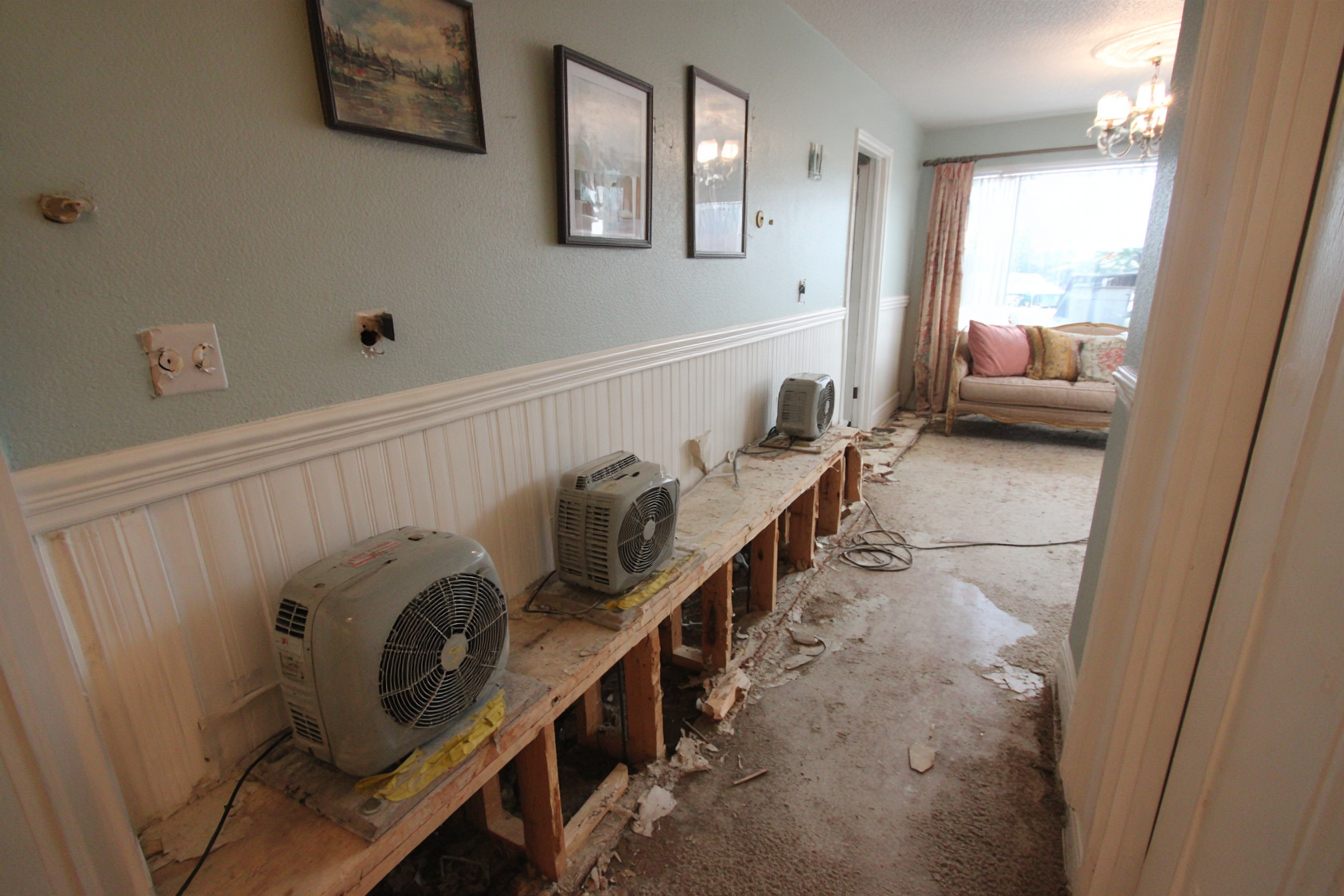
What Water Mitigation Means
Water mitigation is the work that stops water damage from getting bigger. It covers stopping the source, removing standing water, mapping the moisture, taking out what can't be dried and running drying equipment until the structure is back to normal. Insurers use the word to separate this emergency phase from later repairs, and a homeowner is generally expected to mitigate, meaning take reasonable steps to limit the loss. You'll also see it called water damage remediation. On this site that means the same water-only phase, nothing more. Structural drying is the core of it: drying the building itself (framing, subfloor, drywall, concrete), not just the air in the room.
Moisture Mapping Comes First
Before any equipment goes in, a technician finds the edges of the wet area. Pin and pinless meters read the moisture in drywall, wood and concrete. A thermal camera shows cool patches where water is evaporating behind a surface. The readings get marked on a sketch of the room, along with readings from a dry area of the same house to compare against. That dry reading is the target.
Mapping is what keeps drying honest. It shows where to put equipment, which walls need to be opened and when the job is finished. Without it, drying stops when the room looks dry, and that's usually too early.
How Structural Drying Works
| Equipment | What it does |
|---|---|
| Air movers | Push air across wet surfaces so moisture evaporates faster |
| Dehumidifiers (LGR or desiccant) | Pull that moisture out of the air so it doesn't settle somewhere else |
| Floor drying mats or panels | Draw moisture out of hardwood from the top |
| Injection drying | Push dry air into wall cavities and under cabinets through small holes |
| Heat drying | Raises material temperature in some setups so water releases faster |
| Containment | Plastic sheeting that keeps the drying zone small and efficient |
Air movers without dehumidifiers just move water from one wall to another. Dehumidifiers without air movers are slow. A drying plan uses both, sized to the room and the amount of water.
Daily Readings and the Dry Standard
Every visit, the technician re-reads the marked points, records them and adjusts the setup: moves air movers toward areas that are lagging, takes out equipment where readings have reached the target. The log of those numbers is the record of the job. When the wet areas read the same as the dry reference, drying is done.
That record matters later. It tells the repair contractor the walls are ready to close. It tells your insurer why the equipment ran as many days as it did. Ask for a copy.
How Different Materials Dry
| Material | How it usually goes |
|---|---|
| Drywall (clean water) | Often dried in place with air and small vent holes |
| Drywall (dirty water, or soaked for days) | Bottom cut away so the cavity can dry |
| Hardwood | Slow drying with mats; may cup then flatten |
| Subfloor (plywood or OSB) | Dried from above and from the crawl space below; OSB swells more |
| Concrete slab | Dries slowly; readings can stay high long after the surface looks dry |
| Carpet pad | Usually replaced, not dried |
| Wall insulation | Wet fiberglass and cellulose are usually removed |
Living With the Equipment
Drying equipment is loud, keeps running overnight and makes rooms warm and dry. Plan on:
- leaving equipment on and in place, even at night
- keeping doors and windows as the technician sets them
- extra electrical load; the company should tell you which circuits it's using
- keeping pets and small children away from cords and fans
Many families stay home during a clean-water drying job. After a flood, or with equipment in bedrooms, some move out for a few days.
How Do You Know a Wall Is Dry Inside?
By reading it, not touching it. A wall can feel dry on the surface while the gypsum core and the bottom plate behind it are still wet. A moisture meter on the drywall, plus readings through small holes at the base or behind removed baseboard, tells the real story. When those numbers match a wall that never got wet, it's dry.
Why Drying Takes the Days It Takes
There's no fixed number. A clean leak caught early in a carpeted room often needs a few days. Hardwood, a soaked crawl space or a thick slab can take much longer. Each extra day of equipment shows up on the bill, so if drying seems slow, ask to see the readings. They should show a steady trend toward the dry target. If they don't, the setup needs changing. The bill itself: what a cleanup bill is made of. The words on it: mitigation, restoration and repair.
Drying Under the House
Many Renton homes sit over crawl spaces, and that's where drying gets hard. Water that drops through a floor lands on the vapor barrier, soaks the insulation hanging under the joists and wets the subfloor from below. Drying the room above isn't enough. A crawl-space setup usually means pumping any standing water, pulling wet insulation, replacing a torn or pooled vapor barrier and running dehumidifiers and air movers below the floor, with readings taken on the joists and subfloor as well as in the room.
When the Equipment Comes Out
Equipment should come out when the readings say so, not before and not long after. A company that leaves fans running for a week without showing you a trend is adding cost; one that pulls everything on day two because the carpet feels dry is leaving water in the walls. A reasonable question at each visit: which readings are still high, and what's being done about them?
Drying Around Renton
Valley
- Downtown RentonValley floor
- North Renton & The LandingValley floor
- MaplewoodRiver
- Talbot HillValley edge
- KentWA
- TukwilaWA
- SeaTacWA
Plateau
Lakeshore
Main page: water damage in Renton.