What "Emergency" Means Here
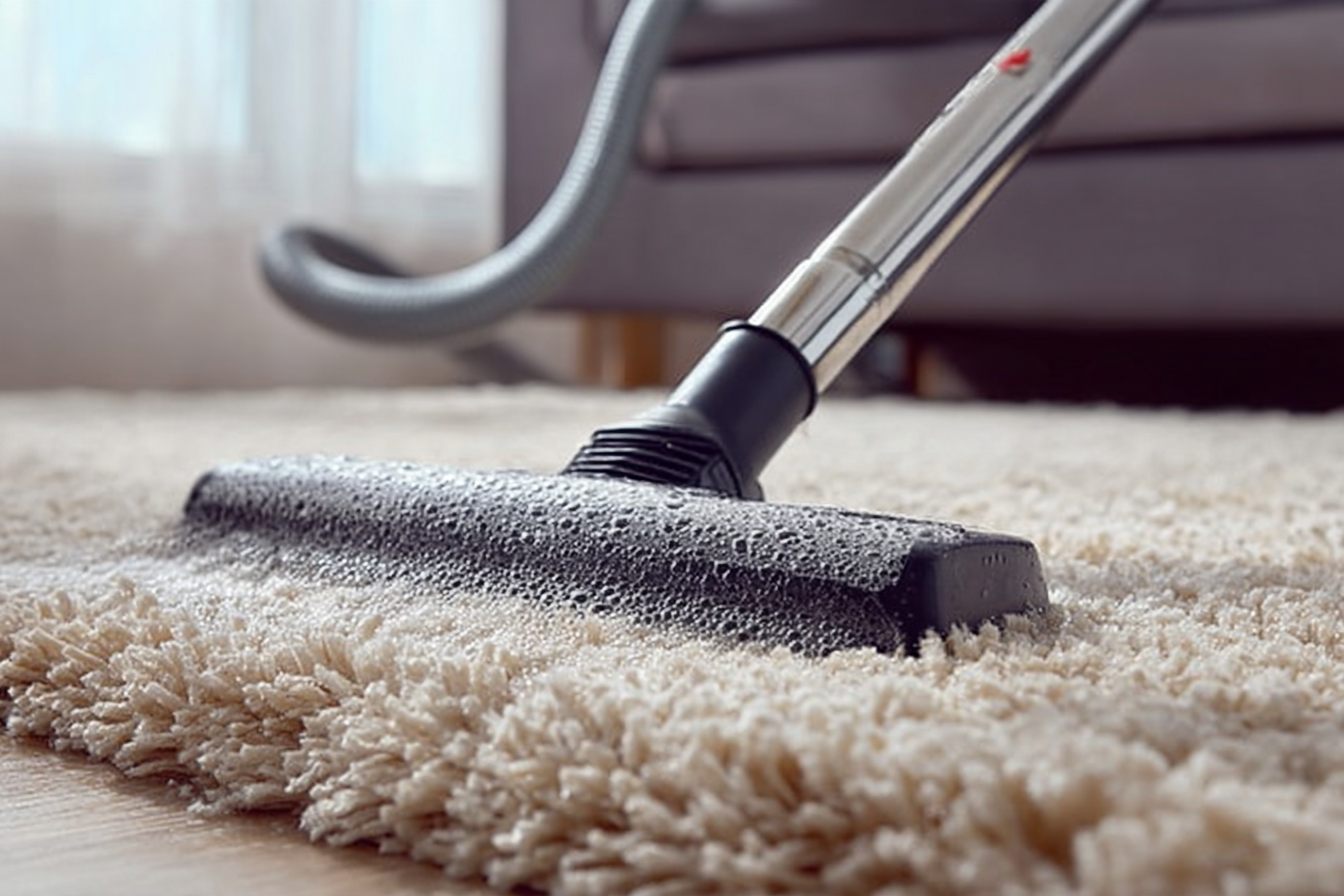
Emergency water removal is the job when water is still sitting somewhere it shouldn't be: on a slab, across carpet, under a crawl-space floor or through a lower level. "Emergency" describes the water, not a promise about timing. Water left standing travels into pad, subfloor and wall bottoms, so it comes out first, ahead of any drying setup. The crew brings pumps for deep water, extraction units for carpet and hard floors, and a wand that squeezes carpet flat to pull water from the pad. Then the meters come out to show how far it traveled.
Water extraction and water removal are the same work under two names. Either way, it's the first line on the bill, and how well it's done sets up everything after it: the less water left behind, the more of the room survives.
The Equipment and What It's For
| Equipment | Used for |
|---|---|
| Submersible pump | Inches or more of water in a crawl space, garage or lower level |
| Truck-mounted unit | Big carpeted spaces; the suction comes from a machine parked outside |
| Portable extractor | Apartments, upper floors and rooms the truck hoses can't reach |
| Weighted carpet wand | Squeezing carpet against the pad so the crew can judge whether it can be kept |
| Squeegees and wet vacs (commercial) | Hard floors and slab edges |
| Moisture meters, thermal camera | Finding the water that has already moved under floors and into walls |
Slab Homes and Crawl-Space Homes
Where the water ends up depends on what the house sits on.
On a slab (common on the valley floor, in newer townhomes and in ground-floor apartments), water spreads sideways fast. It runs under walls into the next room, under cabinets and beneath laminate or vinyl planks. Extraction starts at the deepest spot and works out, and the slab itself can stay damp long after the surface is dry.
Over a crawl space (common in Highlands ramblers and older plateau homes), water often drops through the floor. It soaks the subfloor, the insulation hanging under it and the vapor barrier on the ground. Removal happens twice: once in the room, and again from the crawl space through the hatch.
Where the Water Came From Matters
| Source | How it's handled |
|---|---|
| Supply line, water heater, ice maker | Clean water. Extracted and dried; much of the room can often stay if work starts early |
| Washer or dishwasher drain, toilet overflow without waste | Gray water. Extracted, then surfaces cleaned; pad and some porous materials removed |
| River, street runoff, groundwater | Treated as contaminated. See flood cleanup |
Clean water is only clean at first. After a day or two in carpet and against a warm slab, it picks up what it soaks through, and the job gets handled more like gray water.
While the Call Gets Sorted
You don't need to do the removal yourself, and you shouldn't try. These are the useful things:
- If the water is still running, shut it off at the fixture, the water heater's cold supply or the main.
- Keep everyone, pets included, out of standing water near outlets, cords or appliances. If water reached the electrical panel, don't touch it; call your utility.
- Take photos and a short video before anything is moved.
- Lift small belongings, papers and electronics to a dry room.
- If you rent, tell your landlord or building manager.
Leave the carpet, the pad and the furniture that's too heavy for the crew. Pulling soaked carpet by hand tends to tear it, and that can decide whether it's saved.
Can a Shop Vac Handle It?
For a small, clean spill on tile, sometimes. For anything more, no. A shop vac pulls a few gallons at a time from the surface. It can't reach water in carpet pad, under planks, inside a wall cavity or across a crawl space. Professional extractors remove far more, and the meters that come with them show where the rest of the water went. If the water came from outside or a drain, vacuuming it also spreads contamination into the machine and the air.
After the Water Is Out
Removal is the first step of a longer job. Once standing water is gone, the work moves to moisture mapping and structural drying, then to taking out what can't be dried, and finally to repairs. Ask the company to explain what it found under the surface before you leave the room. That's usually where the size of the job becomes clear.
If the bill and the paperwork worry you, read what a cleanup bill is made of and what the restoration company will ask you.
Apartments and Upper Floors
Water removal in a multi-story building is a different setup. A truck parked at the curb can't always reach a third-floor unit, so portable extractors come up the stairs or the elevator. Water on an upper floor doesn't stay there. It runs into the floor framing and comes through the ceiling below, so the removal plan has to include the unit underneath. If you rent, the building manager usually has to authorize the work. Don't wait to tell them. More in renters and apartment leaks.
Why Water Removal Is Priced by Area
Extraction is usually billed by the square foot rather than by the gallon, because the work depends on the surface, not the volume. A thin layer across a carpeted lower level takes far longer to pull out than a deep puddle on a slab, since the pad holds water the wand has to press out section by section. Ask the company what area it measured and how the carpet decision was made.
Water Removal Around Renton
Valley
- Downtown RentonValley floor
- North Renton & The LandingValley floor
- MaplewoodRiver
- Talbot HillValley edge
- KentWA
- TukwilaWA
- SeaTacWA
Plateau
Lakeshore
Main page: water damage in Renton.