Flood Water Is a Different Job
Flood cleanup is water damage cleanup after water came in from outside: the Cedar River over its banks, a street that ponded and ran into a garage, runoff down a slope into a daylight basement, or groundwater through a slab. Unlike a burst pipe, flood water carries soil, fuel, fertilizer and sewage from wherever it traveled. So the work isn't only flood water removal and drying. It's removing what the water contaminated, cleaning what stays, and then drying. In Renton that means the river neighborhoods in a big storm year, the valley floor when drains back up, and lower levels on slopes almost every winter.
How Restoration Companies Sort Water
| Category | Typical Renton source | What it changes |
|---|---|---|
| 1, clean | Supply line, water heater | Most materials can be dried in place if work starts early |
| 2, gray | Washer or dishwasher discharge | Surfaces cleaned; pad and some porous materials removed |
| 3, contaminated | River flooding, street runoff, groundwater, sewer backup | Porous materials it touched usually removed; everything cleaned before drying |
Flood water is category 3 from the start. That's why the same inch of water costs more to clean up after a flood than after a pipe leak, and why carpet that might have been saved after a supply-line failure usually can't be after a flood.
Flooded Basements and Lower Levels
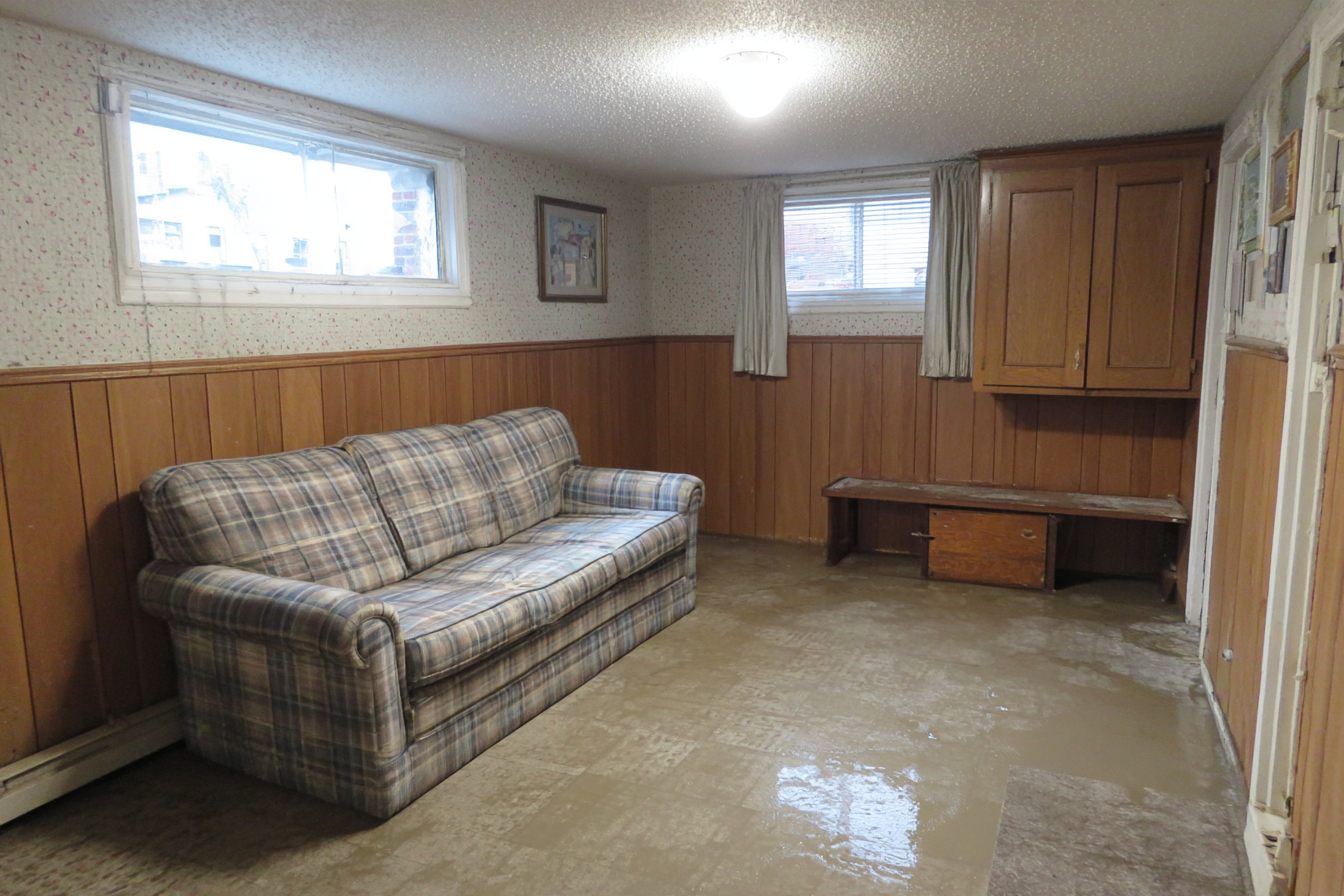
Renton's split-levels and daylight basements take on water in a few predictable ways. The lowest floor is often a family room with carpet, paneling and a laundry area. Water comes in at the slab edge, through a window well or under a door at grade, and spreads across the whole level before anyone sees it.
Flooded basement cleanup usually goes like this:
- Water pumped out, starting at the lowest point
- Carpet and pad removed (flood water rules out saving them in most cases)
- Drywall and paneling cut above the water line, insulation pulled
- Surfaces cleaned and treated
- Drying with air movers and dehumidifiers until the slab and the wall framing read dry
- Repairs once readings say it's ready
More on these houses: split-levels and ramblers.
Flood Damage: What Comes Out and What Can Stay
- Usually removed: carpet and pad, upholstered furniture that sat in the water, drywall and insulation below the flood line, particleboard cabinets, mattresses, paper goods.
- Often cleaned and kept: concrete, framing lumber (cleaned and dried), solid wood furniture if it was raised quickly, metal, glass and hard plastic.
- Depends: hardwood floors, plaster walls, finished doors and trim. These are judged by how long they sat in the water and what it carried.
Photograph everything before it's hauled away. Adjusters and flood insurers want to see the flood damage as it was, not a list written afterward.
The Insurance Question, Briefly
Most homeowners policies exclude damage from flooding and surface water, which includes river overflow and street runoff. That damage is usually covered only by a separate flood policy, often written through the National Flood Insurance Program. A burst pipe in the same basement may be covered by homeowners insurance, and that's why the cause gets documented carefully. The full comparison: flood insurance vs. homeowners insurance.
After the Cedar River Goes Down
When the river drops, the cleanup begins, and it's the riskiest time to rush. Before going back in:
- check official notices from the City of Renton and King County for your street
- don't turn the power back on in a flooded area until an electrician or the utility says it's safe
- wear boots and gloves; flood water and mud are contaminated
- take photos of every room before anything gets moved or hauled off
Then call. A restoration company can pump out what's left, remove the ruined materials and start drying. What the floods have looked like in Renton, and where they reached: when the Cedar River rises.
How Is Flood Cleanup Different From a Burst-Pipe Job?
Three ways. More material comes out, because flood water contaminates anything porous it touches. Everything that stays gets cleaned before drying starts, not just dried. And the paperwork is different: a flood claim usually goes to a flood insurer, a pipe claim to the homeowners insurer, and sometimes both happen in the same house in the same winter. The drying itself works the same way: equipment, readings and a dry standard. See mitigation & drying.
Garages and Ground Floors on the Valley Floor
On Renton's flat valley floor, flood water usually arrives from the street. It comes under a garage door, through a ground-floor slider or up through a slab joint after the storm drains back up. Townhomes with tuck-under garages often take it in the garage first, then through the door into a ground-floor room. The cleanup has two parts: the garage, where the slab is cleaned and dried and stored belongings are sorted, and the living space, where carpet, drywall and trim follow the flood-water rules. More on why it happens: street ponding on the valley floor.
Belongings After a Flood
Belongings are judged by what they're made of and how long they sat in the water. Hard items like dishes, metal tools and solid furniture raised quickly can usually be cleaned. Upholstered furniture, mattresses, stuffed toys, books and papers that soaked in flood water generally can't. Photos, documents and keepsakes are sometimes worth sending to a specialist; ask the restoration company whether it handles contents. Before anything goes to the curb, photograph it and write it down. A flood insurer will want the list.
Flood Cleanup Around Renton
Valley
- Downtown RentonValley floor
- North Renton & The LandingValley floor
- MaplewoodRiver
- Talbot HillValley edge
- KentWA
- TukwilaWA
- SeaTacWA
Plateau
Lakeshore
Main page: water damage in Renton.