Inside Leaks Travel Farther Than They Look
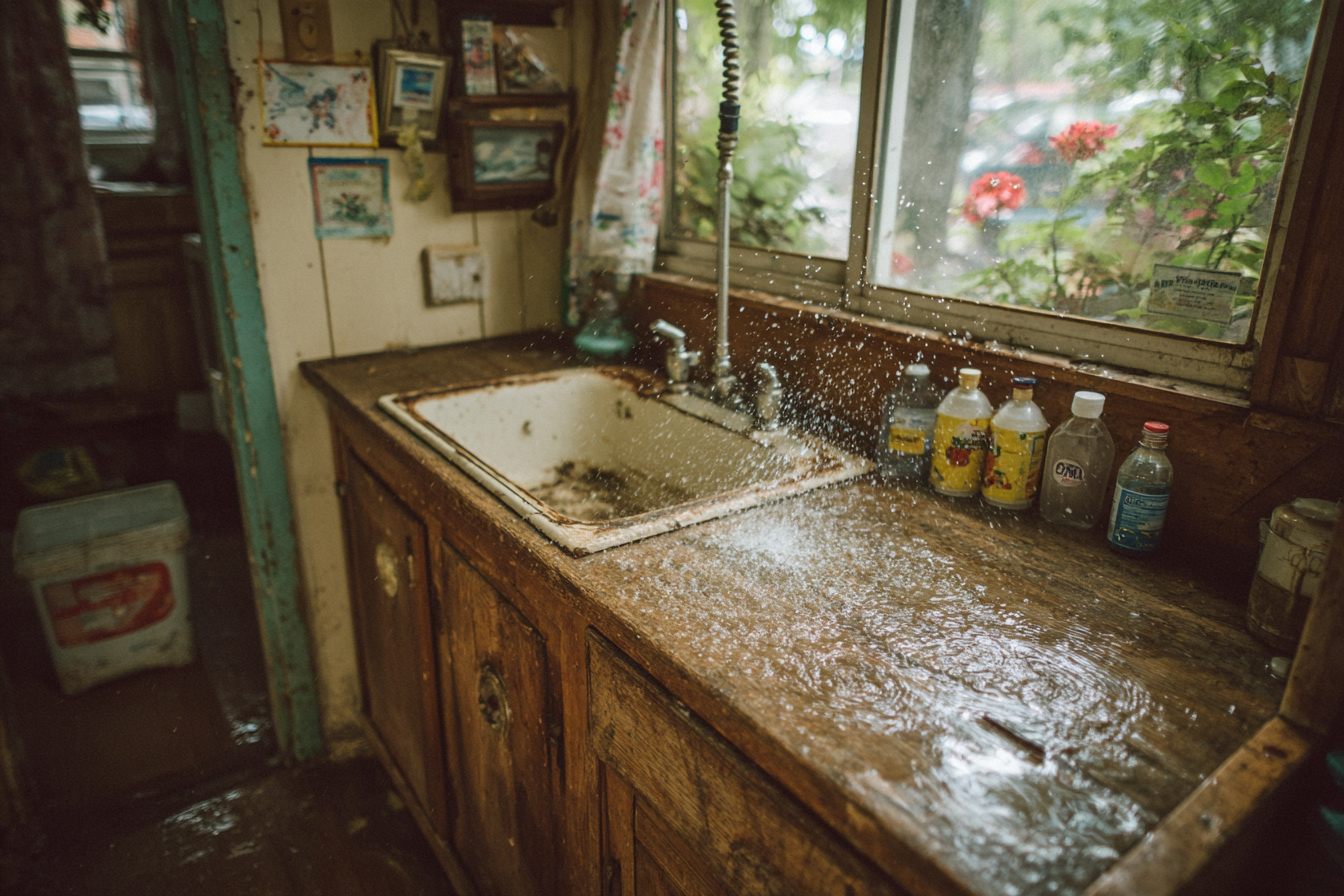
Most water damage in Renton homes doesn't come from the river. It comes from inside: a supply line under a sink, a water heater in the garage, a washing machine hose, a dishwasher, a toilet, an ice-maker line or a pipe that froze in a cold snap. Household plumbing runs under pressure all the time, so a failure releases a lot of water quickly, and it runs under cabinets, beneath flooring and through walls into the next room. Water damage cleanup after a leak means extracting it, finding the hidden spread with meters, cleaning where needed, drying and then repairing.
Leak by Leak
| Source | What usually fails | Where the water goes |
|---|---|---|
| Sink supply line | Braided or plastic line, compression fitting | Into the sink base, then under the cabinets and flooring |
| Water heater | Tank rusts through, relief valve, fittings | Across the garage slab and under the door, or into a closet floor and walls |
| Washing machine | Rubber hoses, drain standpipe | Across the laundry floor, then adjoining rooms or the ceiling below |
| Dishwasher | Supply line, drain hose, door seal | Under the unit and the cabinets beside it |
| Toilet | Supply line, fill valve, wax seal | Into the subfloor and the ceiling below |
| Refrigerator | Ice-maker or water line | Behind and under the fridge, under the floor |
| Pipes in walls or crawl spaces | Freezing, corrosion, old fittings | Inside wall cavities, or onto the crawl-space floor |
Burst and Frozen Pipes
Renton doesn't freeze often, which is exactly why a cold snap catches houses off guard. Pipes in exterior walls, unheated garages, crawl spaces and attics are the ones that split. The break usually happens during the freeze; the leak often shows up when it thaws. By then, water may be running inside a wall or across a crawl space. Shut the main, then call. Burst pipe cleanup usually means opening some drywall to dry the cavity, and checking the crawl space even if the leak was on the main floor.
Slow Leaks and Sudden Leaks
A hose that splits is obvious. A drip at a fitting, a toilet that seeps a little at every flush or a pinhole behind the fridge isn't. Slow leaks can run for weeks before anyone notices, and by then the subfloor may be dark and soft and the cabinet bottom swollen.
They also matter for insurance. Many policies cover sudden, accidental water and exclude damage from long-term seepage. Photos of the failed part and the company's moisture readings help show what happened and when. Signs of a slow leak:
- a warped or stained cabinet floor under a sink
- a toilet that rocks or a floor that feels soft beside it
- a higher water bill without a reason
- a musty smell in one room or closet
- paint or wallpaper loosening low on a wall
A pipe or appliance let go?
Get a Renton restoration company on the line: (425) 584-1660.
Call (425) 584-1660In Apartments and Townhomes
In a shared building, one leak can reach several units. A washer upstairs becomes a ceiling stain downstairs; a water heater in one townhome soaks the shared wall. Tell the landlord or manager right away, photograph everything and keep a list of what was damaged. The building owner's insurance usually handles the structure, while your own renters or condo policy usually covers your belongings. Who pays shouldn't hold up the drying. Renters and apartment leaks.
The Cleanup Order
- Stop the water at the fixture, the water heater's cold supply or the main.
- Extract standing water from floors and, if needed, the crawl space.
- Map the moisture to find where it traveled.
- Clean surfaces the water touched, more thoroughly if it was gray water.
- Dry with equipment and daily readings. See mitigation & drying.
- Repair drywall, flooring and cabinets once it's dry. See restoration & repair.
Who Pays When the Leak Came From Upstairs?
It depends on the building, the leases, any association documents and the insurance policies involved. Often the building owner's or association's policy handles the structure, and each occupant's own policy handles belongings. If one unit's owner was negligent, insurers may sort that out between themselves later. What matters right away is that someone starts the extraction and drying, because the damage grows while the question is argued.
When the Water Heater Is the Source
A water heater holds 40 to 80 gallons and is connected to the supply, so a failure can keep feeding water until someone shuts it off. In Renton homes they sit in garages, hall closets, lower levels and sometimes upstairs utility rooms. A tank that rusts through can leak slowly for days; a failed fitting can spray. Shut off the cold-water supply on top of the tank, turn off its power or gas, and call. In a garage, the water spreads across the slab and under the door into the house. In a closet, it soaks the walls and the floor below.
Toilet Overflows and Supply Lines
Toilets cause more water damage than people expect. A cracked supply line or a stuck fill valve sends clean water across the floor and into the subfloor. A clogged bowl overflowing is a different matter: that water is treated as contaminated, and anything porous it reaches is handled like flood water. In a second-floor bathroom, either kind ends up in the ceiling below.
Leak Cleanup Around Renton
Valley
- Downtown RentonValley floor
- North Renton & The LandingValley floor
- MaplewoodRiver
- Talbot HillValley edge
- KentWA
- TukwilaWA
- SeaTacWA
Plateau
Lakeshore
Main page: water damage in Renton.