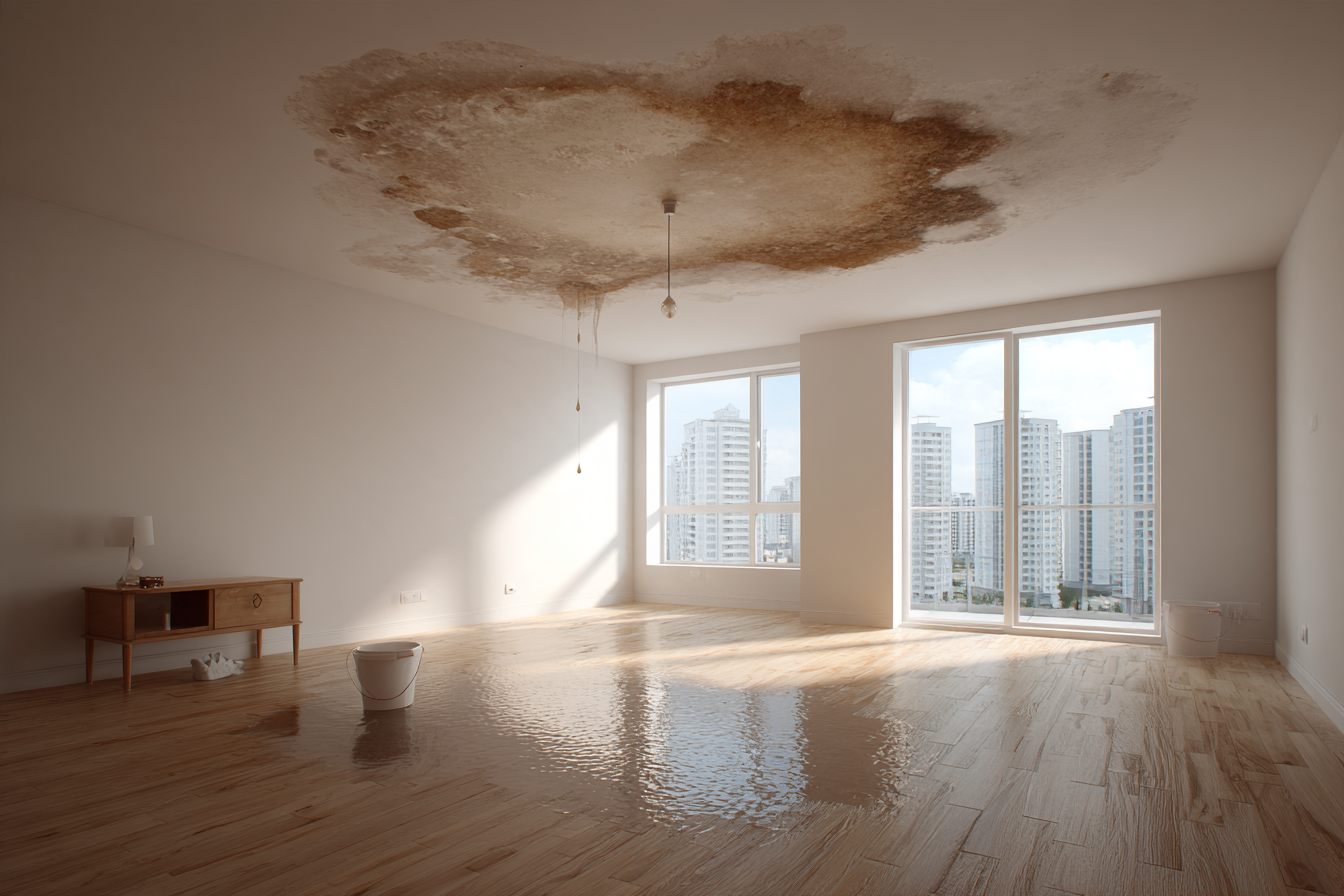
Renton has a lot of apartments and townhomes, from older buildings downtown to newer ones around The Landing and in the valley. Water in a shared building rarely stays where it started. It runs along the floor framing, through shared walls and down through ceilings. When it does, the first question is usually "whose problem is this?" This guide is a practical answer for renters, small landlords and the people in the unit below.
The First Ten Minutes
Whatever your role, the first steps are the same:
- Stop the water if you safely can. Shut off the fixture valve, the toilet supply, the washer valves or the unit's main shutoff if you know where it is.
- Keep away from electricity. Don't touch switches or cords in standing water.
- Tell the building. Call the manager, landlord or emergency maintenance line.
- Photograph and video the water, the source if you can see it and everything that's wet.
- Move your belongings out of the water and away from drips.
Who Usually Handles What
| Situation | Usually responsible for the building | Usually covers your belongings |
|---|---|---|
| Leak starts in your unit (failed supply line, water heater) | Landlord / building owner | Your renters policy, if you have one |
| Leak comes from the unit above | Landlord / building owner, sometimes via the other unit's insurer | Your renters policy, possibly the other party's insurer |
| Leak from a shared pipe or the roof | Landlord / building owner or association | Your renters policy |
| Storm water or flooding at ground level | Landlord / building owner; flood coverage if any | Flood contents coverage if you bought it; most renters policies exclude flood |
| You caused it (left a tub running) | Landlord / building owner, who may seek repayment | Your renters policy, often including liability |
This is the usual pattern, not a rule. Leases, association documents and the policies involved decide the details. What matters on day one is that someone starts extraction and drying. Damage doesn't wait for the paperwork.
If You're the Renter
- Report it in writing as well as by phone (a text or email creates a record).
- Don't start repairs on the building yourself; that's the owner's job.
- Do protect your property and document what was damaged, with photos and a list.
- If you have renters insurance, call your insurer to open a claim for your belongings.
- If the unit becomes unlivable, ask your landlord and insurer about temporary housing; some renters policies include "loss of use."
If You're the Landlord or Owner
- Arrange the extraction and drying promptly. Delay makes the damage, and the claim, bigger.
- Check the units around and below the source, not just the one that called.
- Keep the restoration company's moisture readings and photos for every affected unit.
- Coordinate access with tenants and give them a realistic picture of the equipment: it's loud, runs continuously and may stay for days.
- Notify your insurer, and if another unit's occupant caused the leak, let the insurers sort out who repays whom.
If You're the Unit Below
Water from above usually shows up as a ceiling stain, a drip at a light fixture or a sagging patch of drywall. Stay out from under a sagging ceiling, since it can come down. Turn off the light or fan if water is near it, tell the manager and photograph it. Then make sure someone checks both units, because the floor above is wet too.
A Note on Washington Rentals
Washington's landlord-tenant law generally requires landlords to keep rentals fit to live in and to make repairs within set time frames after written notice, with shorter time frames for problems that affect health and safety. Active water damage usually counts. If repairs aren't happening, the Washington Attorney General's Office and local tenant resources explain the steps tenants can take. This is general information; your lease and the specific situation matter.
Questions
My landlord says to just leave a fan on it. Is that enough?
For a small, clean spill caught right away, maybe. For anything that soaked carpet, ran under walls or came through a ceiling, no. Without meters and dehumidifiers, the hidden moisture stays. Ask that the building be checked by a restoration company.
Do I have to pay for damage the leak did to the unit below?
It depends on the cause and the lease. If an appliance simply failed, the building's insurance usually handles the structure. If a tenant was negligent, the insurers may pursue repayment. Renters policies often include liability coverage for that.
Where This Comes Up
Apartments and townhomes are common in North Renton & The Landing, Tukwila and SeaTac. The cleanup itself: water damage cleanup.
Flood Insurance vs. Homeowners Insurance in Washington
Which policy usually answers for which kind of water.
Storm Drains and Street Ponding on the Valley Floor
Why flat ground floods in heavy rain, and how that water ends up indoors.