Drive through the Highlands, Benson Hill, Cascade or Fairwood and you'll see two house shapes more than any other: the one-story rambler and the split-level. Both were built in large numbers from the 1950s through the 1980s, and both handle water in predictable ways. If you know the shape of your house, you can guess where a leak went before anyone takes a reading.
The Rambler
A rambler is a single story, usually long and low, often over a crawl space and sometimes on a slab.
Where the water goes. In a crawl-space rambler, a leak on the main floor doesn't stay there. Water runs along the floor, finds a gap at a wall, a register or a plumbing hole, and drops into the crawl space. There it soaks the insulation hanging under the floor and pools on the plastic vapor barrier. Upstairs, the floor may seem nearly dry while the subfloor and joists below are wet.
Common sources:
- supply lines under kitchen and bathroom sinks
- toilet supply lines and wax seals
- water heaters in a hall closet or garage
- pipes in the crawl space during a freeze
What the drying looks like: extraction on the main floor, then a second extraction and drying setup in the crawl space. Wet insulation usually comes down, and a torn or pooled vapor barrier gets replaced.
The Split-Level
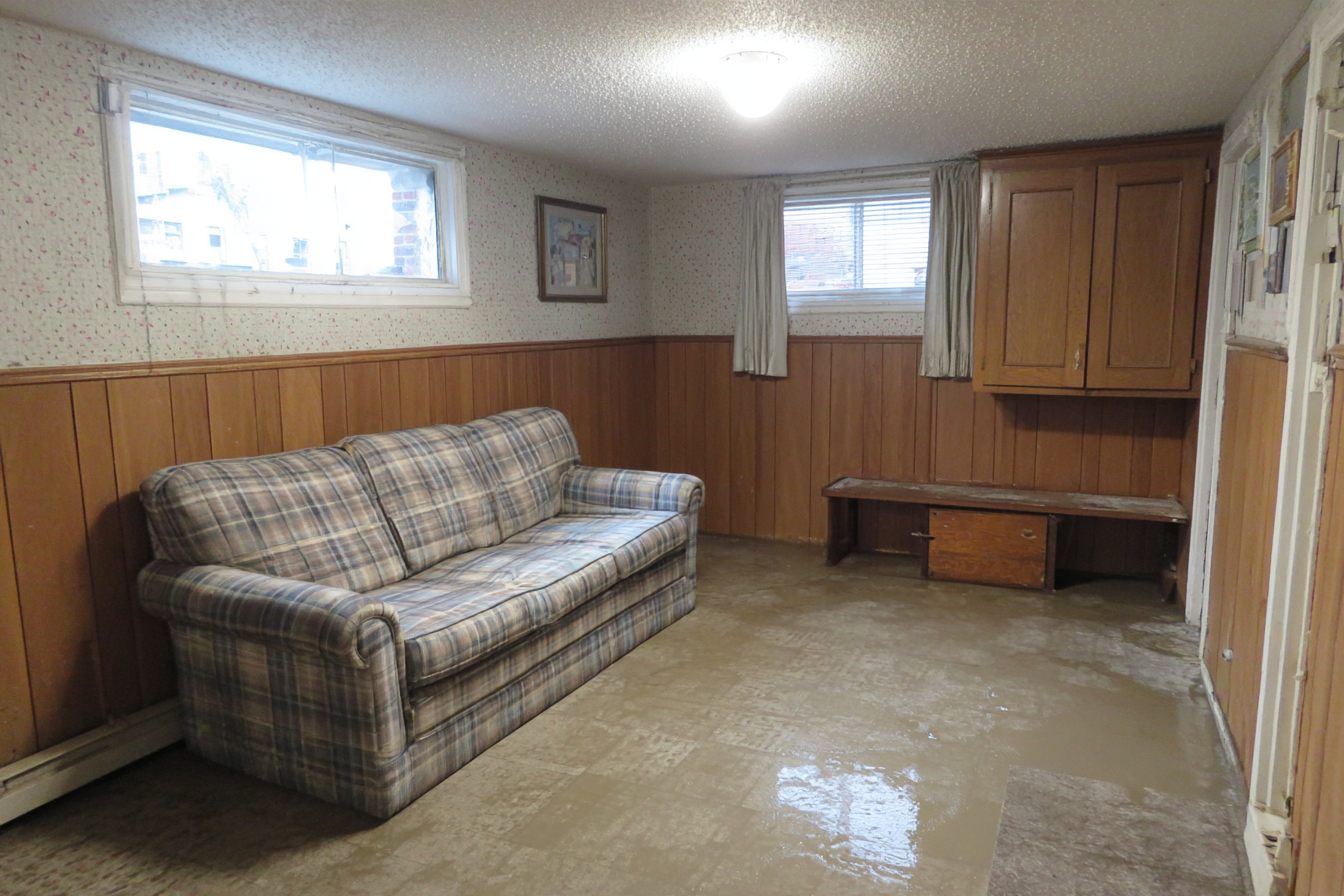
A split-level puts the front door between floors. A short stair goes up to the living room, kitchen and bedrooms. A short stair goes down to a lower level that's partly below grade, often a family room, sometimes a bedroom, with the laundry, water heater and furnace nearby.
Where the water goes. The lower level is where water collects, whatever the source. A washer hose, a water heater or a failed toilet upstairs sends water down. Long rains bring seepage at the slab edge or through a window well. And the lower level is usually carpeted, often paneled, so water spreads across the whole room and soaks in before anyone sees it.
Common sources:
- washer hoses and drain overflows in a lower-level laundry
- water heaters next to the family room
- seepage along the buried wall during long rains
- window wells that fill and overflow
- leaks from the upper-level bathroom running down inside walls
What the drying looks like: carpet and pad assessment (pad usually goes), paneling or drywall removed at the bottom if needed, and long drying of the slab and the wall bases. If the water came from outside, it's a flooded basement in all but name, and the cleanup is treated like flood water.
Water across the lower level?
Get a Renton restoration company on the line: (425) 584-1660.
Call (425) 584-1660Level by Level
| Area | Rambler | Split-level |
|---|---|---|
| Main living floor | Leaks drop through to the crawl space | Leaks run down to the lower level |
| Lower level | None (or crawl space) | Carpeted family room, often finished |
| Laundry and water heater | Garage or hall closet | Often next to the lower family room |
| Outside water | Crawl-space flooding in long rains | Seepage at the buried wall and window wells |
| Hardest part to dry | Crawl space and subfloor | Slab, wall bases and carpet |
Age Matters Too
Houses from the 1960s to the 1980s are now old enough that original parts are failing:
- Water heaters generally last around 8 to 12 years; many have been replaced once or twice, sometimes with the old connectors reused.
- Supply lines and shutoff valves may be original. Old valves often won't close when needed.
- Galvanized pipe, where it remains, corrodes from inside.
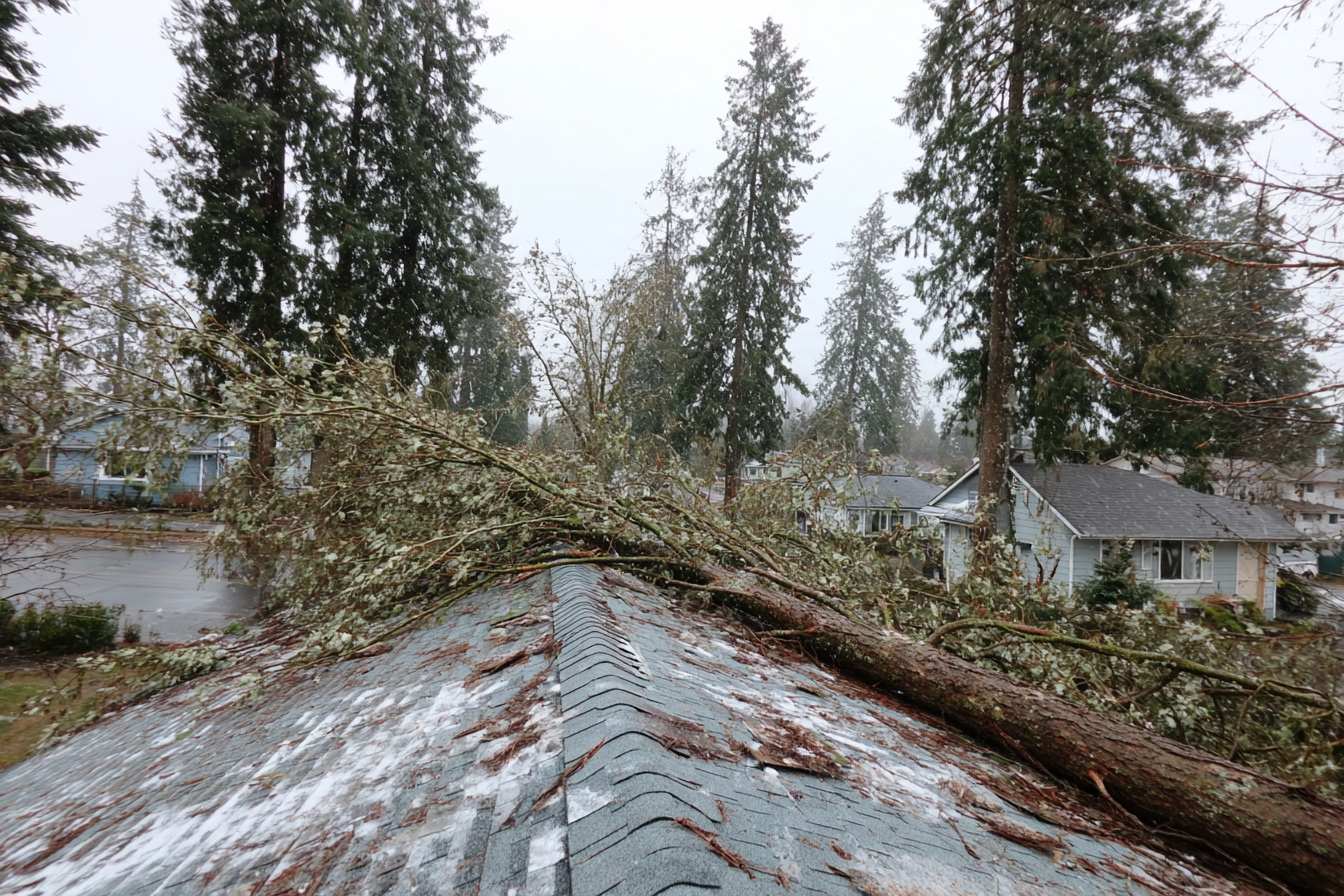
- Roofs under tall firs take a beating in windstorms. See roof and attic leaks after a windstorm.
A few inexpensive upgrades help: braided washer hoses, a drain pan and leak sensor under the water heater, and shutoff valves that actually turn.
Two-Story Homes Too
Newer plateau subdivisions add the two-story house, with laundry rooms and bathrooms over living space. In those, water from a washer hose or a toilet line goes straight down into the ceiling below, and the stain is often in a different room from the leak because water runs along the joists first. The drying plan covers both floors: the subfloor upstairs and the ceiling, insulation and walls below.
Questions
My crawl space always smells damp. Is that water damage?
Not necessarily, but it's worth a reading. A torn vapor barrier, a slow plumbing leak or poor drainage can all cause it. A restoration company can measure moisture in the subfloor and joists and tell you whether something is actively wet.
Can a lower-level carpet be saved?
After clean water caught early, sometimes. The pad is usually replaced. After outside water or a long-running leak, the carpet usually goes too.
On the Plateau
These houses fill Renton Highlands, Benson Hill and Fairwood, with older versions in Talbot Hill and Burien. The cleanup after inside leaks: water damage cleanup.
Roof and Attic Leaks After a Windstorm
Fallen branches, lifted shingles and the ceiling stain that shows up later.
Water Damage Myths Renton Homeowners Hear
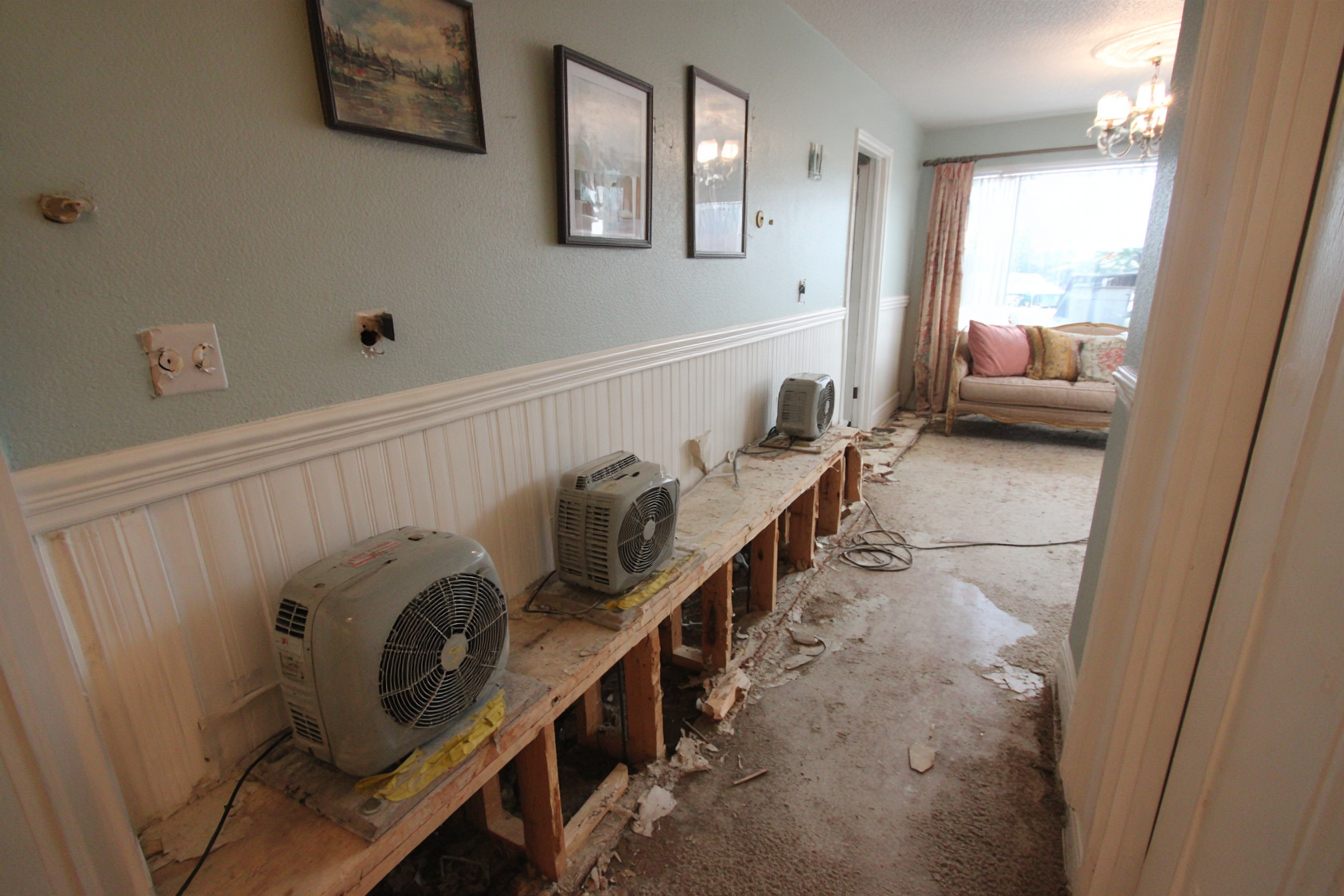
Nine common beliefs about leaks and drying, and what's actually true.