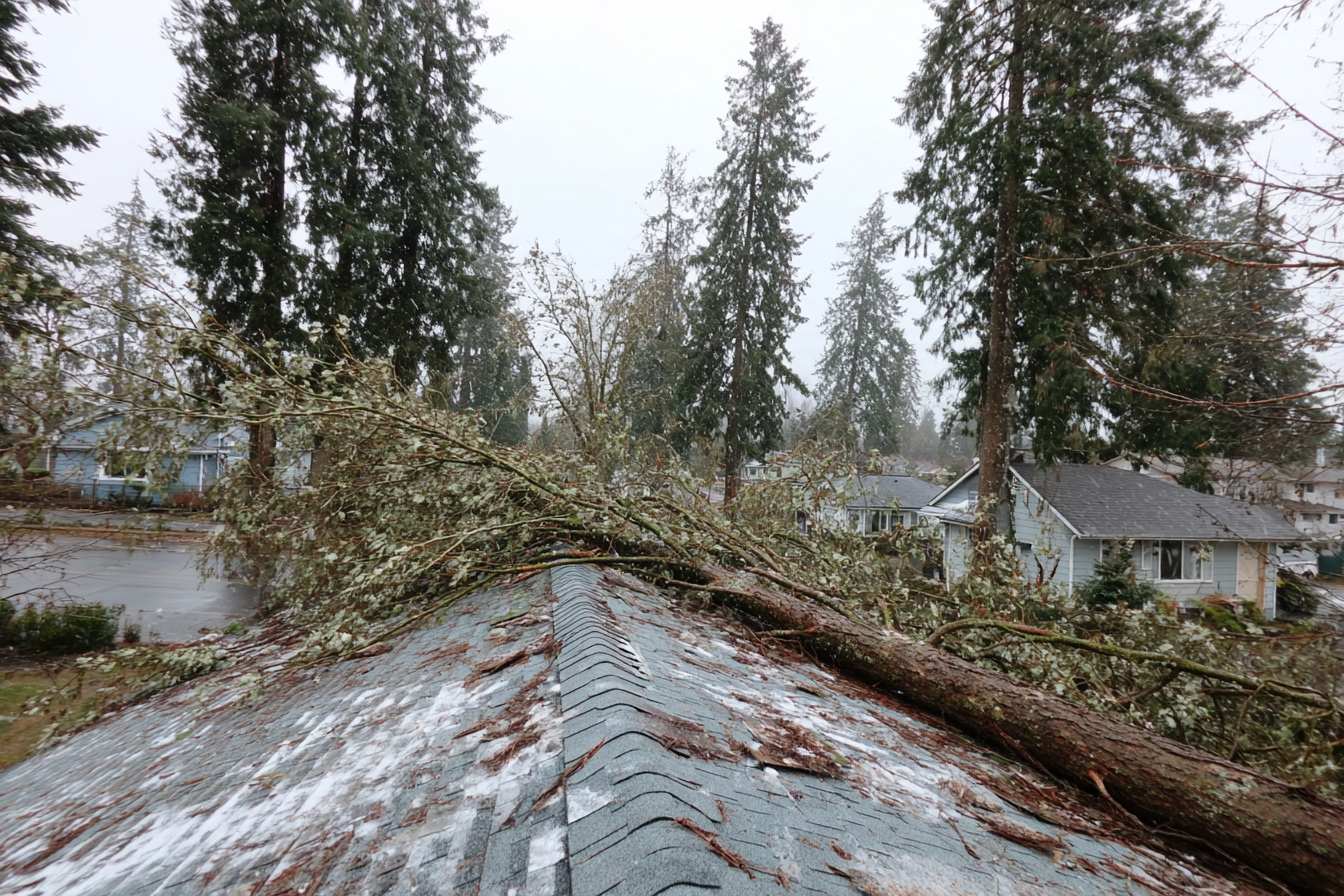
The Puget Sound area gets its windstorms in the same months it gets its heaviest rain. In neighborhoods full of tall Douglas firs, cedars and big-leaf maples, a strong wind brings branches, sometimes whole trees, down on roofs. The rain that follows finds every gap. The damage often doesn't show for a day or two, until a stain spreads across a bedroom ceiling. This guide explains how that water travels and why a roof leak is usually a bigger job than it looks.
How Wind Opens a Roof
- Lifted or torn shingles. Strong gusts get under shingle edges, break the seal and fold them back or tear them off.
- Branch strikes. A falling limb punctures shingles and sheathing, or cracks them where it can't be seen from the ground.
- Damaged flashing around chimneys, vents and skylights.
- Clogged gutters packed with needles and twigs overflow against the fascia and into the eaves.
- Downed trees, obviously, open the roof outright.
How the Water Travels
Water rarely comes through the ceiling right under the hole. It hits the sheathing, runs down the rafters, soaks into the attic insulation and spreads along the top of the ceiling drywall before it shows. By the time a stain appears:
- the insulation above it is wet and holding water against the drywall
- the drywall core may be saturated across a wider area than the stain
- water may have run down inside an exterior wall
- in a two-story home, it may have reached the floor below through the wall cavity
Wet insulation is the key problem. It holds water for a long time, sags and loses its insulating value. It usually needs to come out.
First Steps After a Windstorm
- Stay safe. Keep away from downed lines and don't go on the roof. Stay out from under any ceiling that sags or bulges.
- Photograph the outside from the ground: missing shingles, branches on the roof, damaged gutters.
- Photograph the inside: stains, drips and wet insulation if you can see into the attic safely.
- Catch drips with buckets and move belongings out of the way.
- Get the roof covered. A roofer or restoration company can tarp it to stop more water getting in.
- Call your insurer. Wind damage is usually a covered cause under homeowners policies, and the water that follows is typically part of the same claim.
What the Interior Work Looks Like
- Moisture readings on the ceiling, the walls below and the attic framing
- Wet insulation removed from the attic
- Ceiling drywall assessed. Small areas sometimes dry in place; saturated or sagging sections are cut out
- Drying equipment in the room and often in the attic
- Walls opened at the bottom if water ran down inside them
- Repairs after readings confirm dry: new drywall, texture, paint and insulation
The roof repair itself is usually a roofer's job. The restoration company handles what happened inside.
Skylights, Chimneys and Vents
Not every storm leak comes from a missing shingle. Flashing around chimneys, plumbing vents and skylights loosens over time, and wind-driven rain pushes water sideways under it. These leaks often show up as a stain near the top of a wall or around a skylight frame rather than in the middle of a ceiling. They're also easy to mistake for condensation. A moisture reading during or after rain, compared with a dry day, usually settles it.
Before the Next Storm Season
- Clean gutters and downspouts in fall, and again after big wind events
- Have large trees near the house checked by an arborist
- Look for lifted or missing shingles after any big storm
- Know where your attic access is and keep it clear
Questions
The stain is small. Can I just paint over it?
Not until it's dry inside, and the insulation above it is checked. Paint over a wet ceiling traps the moisture, and the stain comes back.
Is it covered by insurance?
Wind damage to the roof is usually a covered cause, and the interior water damage that results is typically handled under the same claim. Long-term leaks from an old, worn roof are often excluded. Your policy decides.
Who do I call first, roofer or restoration company?
If water is still coming in, get the roof tarped first. Then the restoration company can dry what's already wet. Some restoration companies can arrange both.
Where This Happens
Tall trees over roofs are common in Renton Highlands, Fairwood, Kennydale and Covington. After the storm: mitigation & drying.
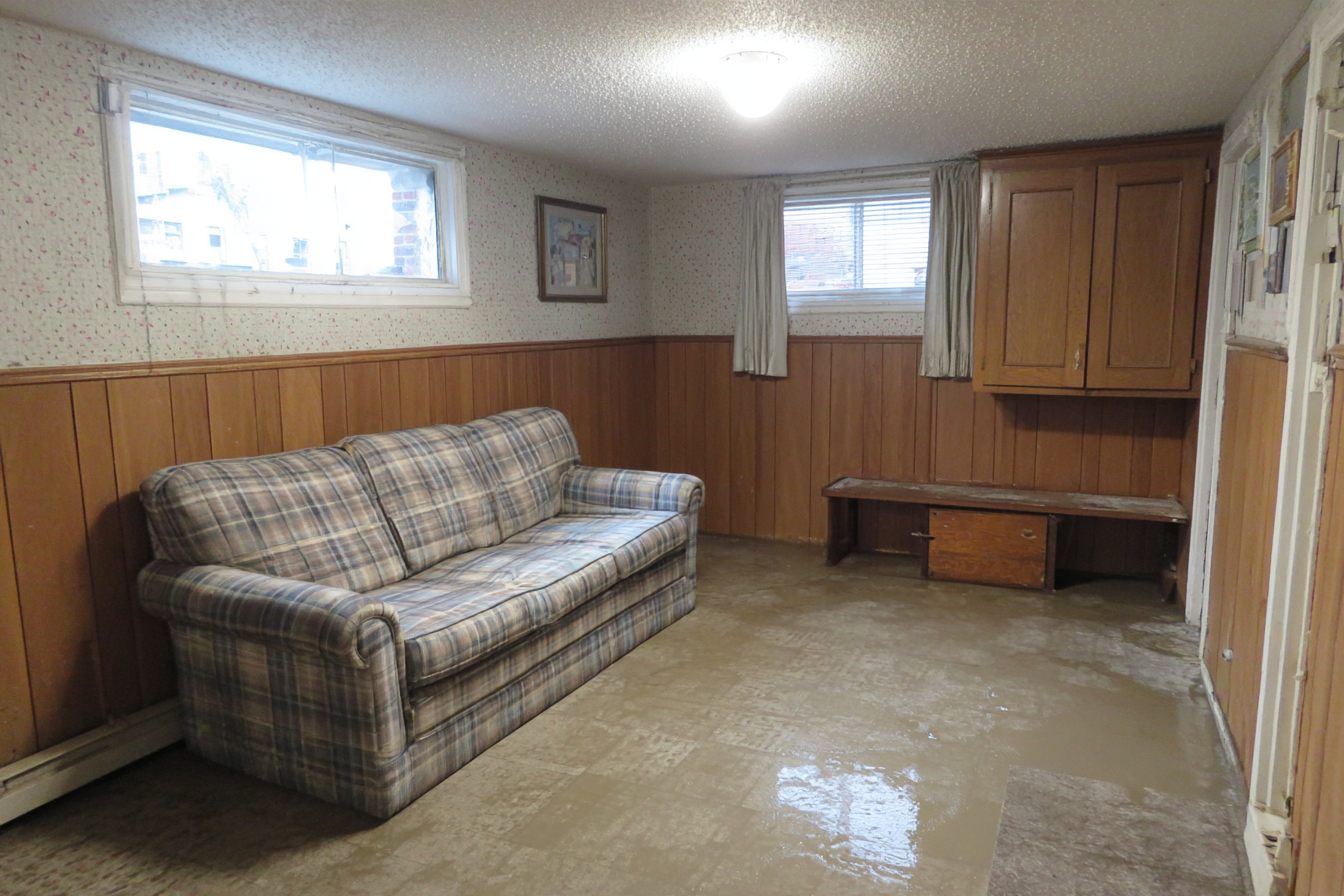
Split-Levels and Ramblers: Where Water Collects
How the plateau's most common houses take on water, level by level.
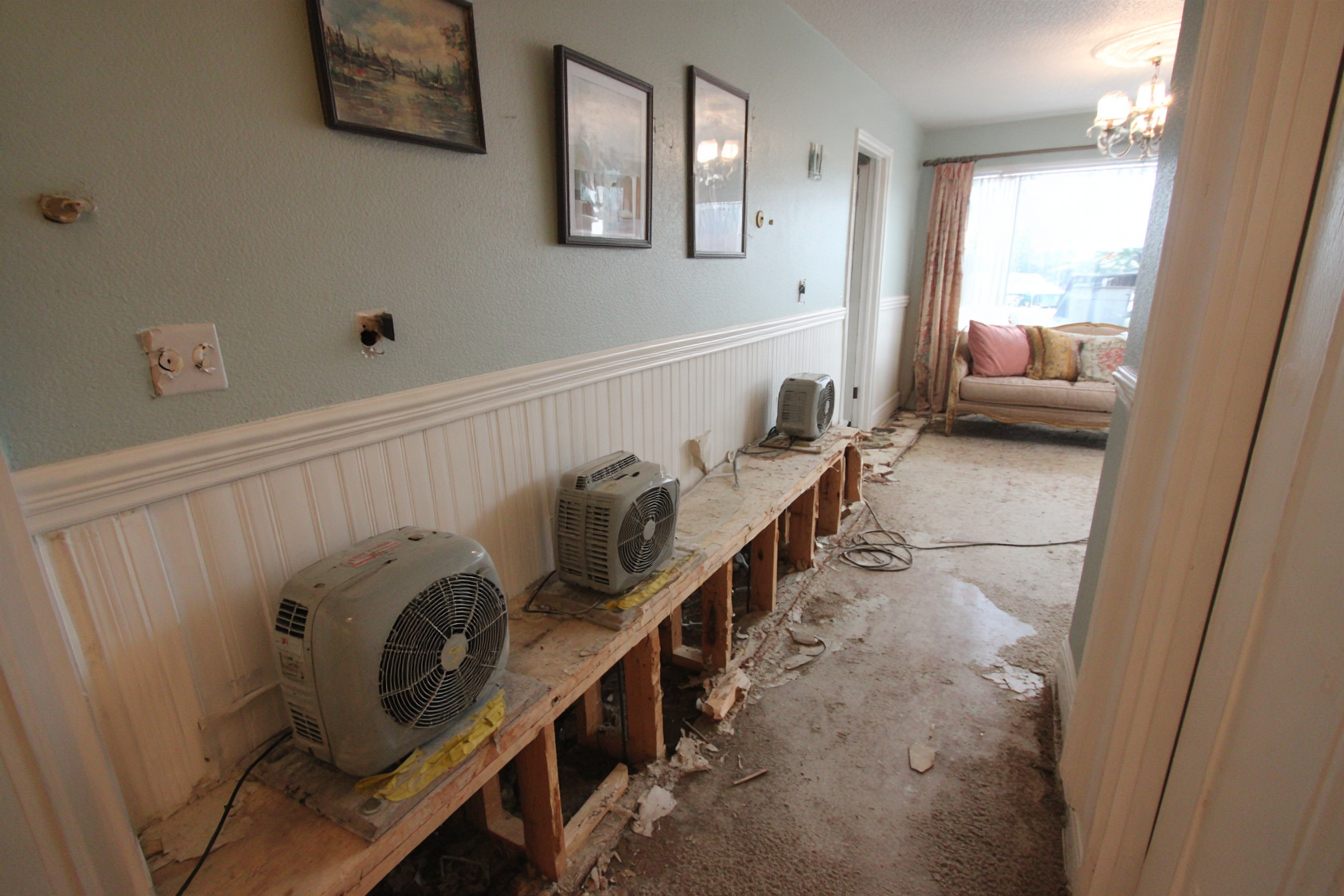
Water Damage Myths Renton Homeowners Hear
Nine common beliefs about leaks and drying, and what's actually true.